Papua New Guinea stands as one of the world’s premier destinations for bird enthusiasts, particularly those seeking to witness the extraordinary birds-of-paradise in their natural habitat. With nearly 900 bird species fluttering across its diverse landscapes, including 38 of the world’s 43 birds-of-paradise species, this island nation offers unparalleled opportunities for wildlife enthusiasts to observe some of nature’s most spectacular evolutionary marvels.
The Allure of Birds-of-Paradise
Known locally as “kumuls,” birds-of-paradise have captivated human imagination for centuries. Their extraordinary plumage, elaborate courtship displays, and haunting calls make them the holy grail for serious birders. These remarkable creatures evolved in isolation, developing some of the most spectacular adaptations in the animal kingdom—from wire-like tail feathers to iridescent throat shields and elaborate head plumes.
What makes these birds particularly special is not just their appearance but their behavior. Males perform complex courtship rituals, transforming themselves into pulsating, shape-shifting creatures that seem almost otherworldly. These displays typically occur at dawn, requiring dedicated birders to rise well before sunrise and position themselves quietly near known display grounds.
Prime Locations for Bird-of-Paradise Sightings
The Highlands Region
The fertile highlands of Papua New Guinea, with their dense, mist-shrouded forests, harbor the greatest diversity of birds-of-paradise. The areas around Mount Hagen and Goroka are known natural habitats for at least ten species, including some of the most sought-after varieties.
Rondon Ridge, situated in the Western Highlands, serves as an excellent base for bird-watching expeditions. The surrounding rainforests have recorded over 180 bird species, including ten birds-of-paradise species. Visitors staying at this premier lodge can explore extensive walking trails that provide ample opportunities to spot the Brown Sicklebill, Stephanie’s Astrapia, and the aptly named Superb Bird-of-Paradise.
For those willing to venture further, the King of Saxony Bird-of-Paradise, with its extraordinary head plumes that extend far beyond its body length, can be found in the higher-altitude forests. The Ribbon-tailed Astrapia, with its dramatically long white tail streamers, represents another highland specialty that draws photographers from around the world.
Varirata National Park
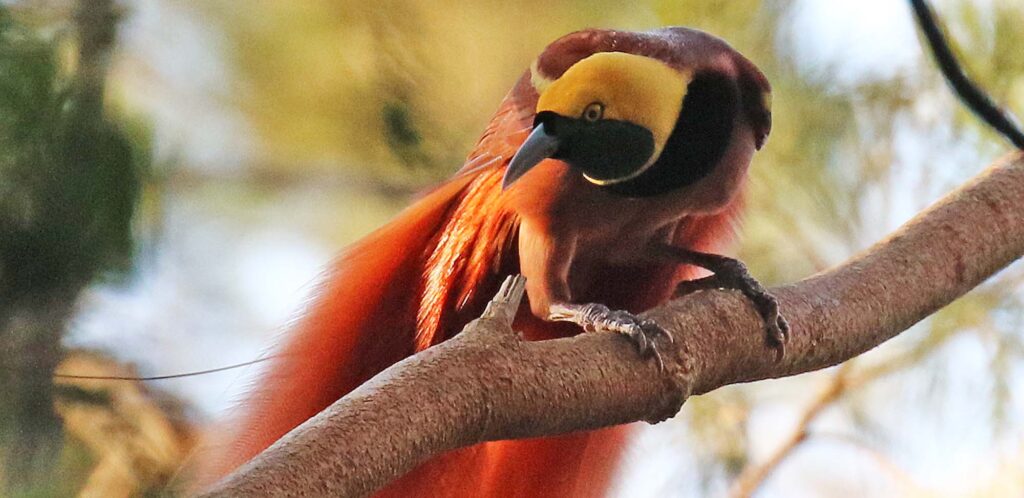
Just outside Port Moresby, Varirata National Park offers accessible bird-watching for those with limited time. The park’s mixture of eucalypt and evergreen forests provides habitat for the Raggiana Bird-of-Paradise—Papua New Guinea’s national bird and the species featured on the country’s flag. Early morning visits maximize the chance of witnessing males performing their group displays, their plumage transformed into vibrant orange-red cascades as they bounce on their display perches.
Beyond birds-of-paradise, Varirata hosts numerous other specialties, including the Brown-headed Paradise-kingfisher and a variety of fruit-doves, cuckooshrikes, and flycatchers. The park’s proximity to the capital makes it an essential first stop for any birding itinerary.
Kumul Lodge
Kumul Lodge has earned legendary status among birders worldwide for its remarkable accessibility to birds-of-paradise. What sets this location apart is its famous bird feeding table, where species that would normally require hours of patient forest observation regularly appear at close range.
Visitors can observe the Brown Sicklebill, with its extraordinary curved bill, alongside the Ribbon-tailed Astrapia and Brehm’s Tiger-parrot. The surrounding forests host additional species, including the King of Saxony and the short-tailed Paradigalla. For photographers, these reliable sightings provide unparalleled opportunities to capture images that would require extraordinary luck elsewhere.
The Sepik Region
The lowland forests surrounding the Sepik River offer different bird-of-paradise species adapted to lower elevations. Most notable is the Twelve-wired Bird-of-Paradise, named for the wire-like filaments that extend from its flanks. Males perform their displays on vertical perches, often dead trees, where they bounce and showcase their golden-yellow plumage.
Boat trips along the river and its tributaries not only provide access to these spectacular birds but also offer glimpses of the region’s rich cultural heritage, with villages maintaining traditional lifestyles deeply connected to the natural world.
Kiunga and Western Province
For the truly adventurous, the remote western province near the border with Indonesia harbors some of the most spectacular birds-of-paradise. The area around Kiunga, though requiring more logistical planning to access, rewards visitors with sightings of the King Bird-of-Paradise—the smallest member of the family but perhaps one of the most brilliantly colored with its crimson and white plumage and green-tipped spiral tail wires.
Boat trips on the Fly River open opportunities to see approximately 300 bird species in this region, which accounts for roughly half of Papua New Guinea’s total bird life.
Planning Your Bird-Watching Expedition
Best Time to Visit
While Papua New Guinea’s birds aren’t migratory, meaning they can be observed year-round, the dry season from April to October offers the most comfortable conditions and best visibility. June through September provides optimal conditions, with August and September being particularly favorable. The dry weather makes forest trails more accessible and increases the likelihood of clear viewing conditions.
Essential Equipment
Successful bird-watching in Papua New Guinea requires proper preparation:
- High-quality binoculars (8×42 or 10×42 recommended)
- Camera with telephoto lens
- Waterproof gear (even in dry season, prepare for showers)
- Sturdy hiking boots for forest trails
- Neutral-colored clothing that blends with forest environments
- Early morning wake-up determination (many displays occur at dawn)
Guided Experiences
Given the challenging terrain and specialized knowledge required to locate birds-of-paradise, most visitors opt for guided experiences. Specialized tour companies offer itineraries led by expert ornithologists and local guides who know precisely where and when to find specific species.
Local guides possess invaluable knowledge not just about bird locations but also about their behaviors and the optimal viewing techniques. Their expertise dramatically increases the chances of successful sightings and enhances the overall experience through their cultural insights and forest knowledge.
Conservation Considerations
The birds-of-paradise face increasing threats from habitat loss as forests are cleared for agriculture and logging. Climate change also poses long-term challenges to these specialized species. Responsible tourism plays a vital role in conservation by providing economic incentives for local communities to protect forests and their avian inhabitants.
When visiting, travelers should adhere to ethical bird-watching practices: maintain appropriate distances, avoid disrupting displays, and respect local customs regarding forest access. Many communities now see the economic value in preserving their forests for bird-watching tourism, creating a sustainable alternative to more destructive land uses.
A Transformative Experience
For those fortunate enough to witness birds-of-paradise in their natural habitat, the experience transcends ordinary wildlife viewing. There is something profoundly moving about watching these evolutionary marvels perform displays that have been refined over millions of years in the isolation of New Guinea’s forests.
As dawn breaks over misty mountain forests and the first calls of birds-of-paradise echo through the canopy, even the most seasoned birders find themselves transported by the magic of these extraordinary creatures. In a world of diminishing wilderness, Papua New Guinea offers a rare opportunity to connect with nature at its most spectacular and to witness living art forms that continue to inspire wonder and awe in all who see them.
No Responses